

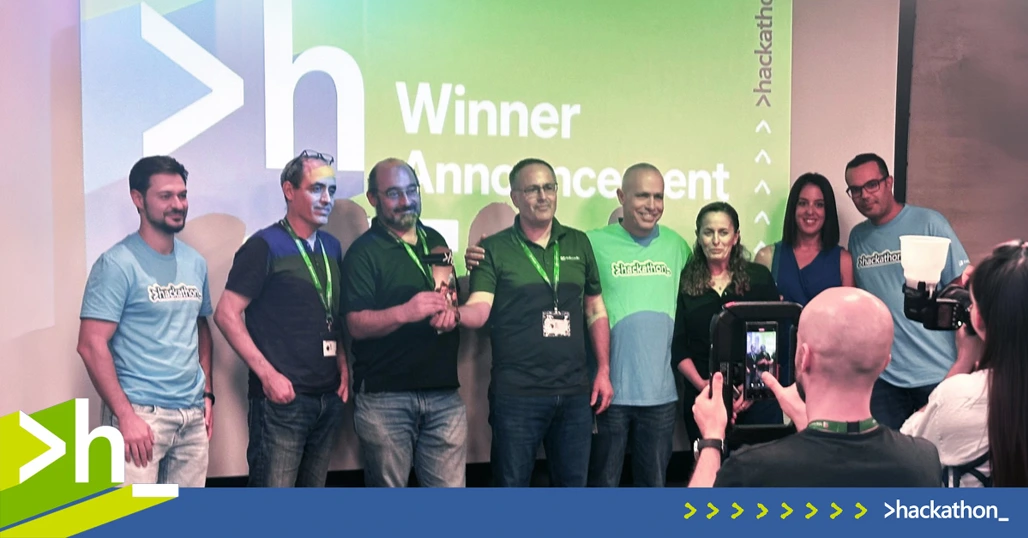
What if understanding your communications data were as simple as asking a question? That idea earned AudioCodes first place in the Data Driven Impact challenge at the 2026 Microsoft Global Hackathon and is now being developed into new AI-powered analytics capabilities for AudioCodes Live Platform.
What If You Could Ask Your Communications Data a Question?
Why are calls sounding poor at one location? How many contact center agents should we schedule tomorrow? Which outbound campaigns are producing unusually short calls?
These are practical questions for the people responsible for communications services. Answering them can involve building reports, comparing data from different services and following several lines of investigation before a useful explanation emerges.
Bringing Communications Data into One View
AudioCodes Live Platform processes approximately 65 billion events every month across its global deployments. It supports enterprise voice and AI services across Microsoft Teams, Webex Calling and Zoom Phone, while also serving as a content delivery platform for service providers and channel partners.
That scale creates an opportunity to learn more about service performance and business activity. Making the information useful, however, requires bringing data from individual services together so teams can investigate what is happening across their environment.
Working through Hack with Customers, a program in which Microsoft engineers support customer and partner teams, we built a unified data layer on Microsoft Fabric. The project streams service information in near real time and applies AI-driven analytics using Azure Data Explorer, Fabric Real-Time Intelligence and Azure SRE Agent.
Asking Questions That Lead to Action
The project is designed to make that data accessible through natural-language questions. Once the capabilities are integrated into Live Platform, customers are expected to be able to investigate issues and explore trends without first building a report or working through several layers of analysis.
An IT team investigating voice quality could ask what is causing the problem and discover that it is isolated to a single Wi-Fi access point. That would give the team a specific place to focus its investigation and remediation efforts.
A contact center could use the same approach to forecast staffing needs for the next day’s shift or identify outbound campaigns with unusually short calls. These questions move the analysis beyond service health into decisions about resources and business performance.
The project can also generate charts and visual reports on request and add new dimensions to the data without additional development. For service providers and channel partners, the planned capabilities could help support teams investigate customer issues faster and provide more informed guidance.
A Hackathon Win with a Practical Purpose
The Data Driven Impact challenge recognizes projects that use data and technology to create measurable business impact. Judges evaluate practical applicability, innovation and the ability to address a genuine business challenge.
For us, the value of the project lies in putting operational and business insight directly into customers’ hands. As Ran Inbar, CTO of AudioCodes, explains:
“Our customers generate enormous amounts of data across their communications services. What they need is the ability to speak with that data and get answers in seconds.”
That ambition extends the role of AI in communications. Alongside applications that interact with callers or assist agents, AI can help the teams running those services understand performance, investigate problems and plan what comes next.
What Comes Next for Live Platform
Following the Hackathon, AudioCodes has begun full development to bring these capabilities into Live Platform, with availability expected in mid-2027.
Development is focused on data isolation, privacy and authentication. These controls are central to making the approach suitable for customers who need to query their own information while keeping it secure and separated from other customers’ data.
The project points toward a more accessible way to manage communications services: ask a question, understand what the data is showing and use that insight to decide what to do next. The next stage is bringing that experience into customers’ everyday operations.
FAQs
The Microsoft Global Hackathon is an annual event that brings participants together across locations worldwide. In 2026, the Microsoft Hackathon in Israel was held September 6–9 at the Microsoft campus in Herzliya.
AudioCodes won first place in the Data Driven Impact challenge for a project that adds an AI analytics layer to communications data. Built on Microsoft Fabric, the project lets users ask questions in plain language to investigate issues, identify patterns and forecast demand.
Teams could ask about voice quality, staffing demand or unusual call patterns instead of starting with a custom report. The project can return answers and generate charts or visual reports, helping users explore their data in a more direct way.
The capabilities are in development, with availability expected in mid-2027. Work is focused on integrating them into Live Platform with data isolation, privacy and authentication controls.


